


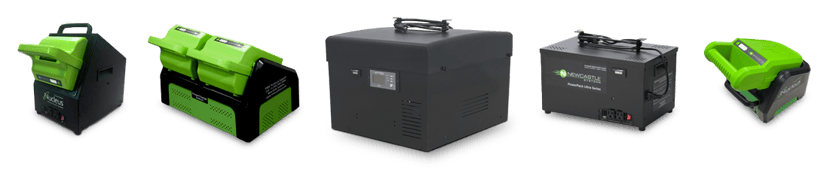
TL;DR: Choosing the right portable power systems can improve warehouse productivity by bringing power directly to the point of work. This guide explains the different battery technologies, system configurations, and Newcastle Systems solutions to help you select the best portable power solution for your operation.
- Learn how portable power systems reduce downtime and eliminate unnecessary travel between fixed workstations.
- Compare sealed lead acid battery technology with modern lithium iron phosphate systems, including differences in battery life, weight, and long-term value.
- Understand the advantages of swappable battery and fixed battery designs for single-shift and 24/7 operations.
- Explore Newcastle Systems' PowerSwap, PowerMaxx, and PowerPack product lines to find the right portable power system for your workflow.
- Discover how mobile battery power helps warehouses improve efficiency, safety, and operational flexibility.
Warehouse productivity depends on keeping people and equipment moving. If employees spend valuable time walking back to a central workstation to print labels, update inventory, or access information, every trip slows operations and reduces efficiency.
Portable power systems eliminate these unnecessary trips by bringing technology directly to the point of work. Instead of relying on fixed workstations connected to grid power, employees can use mobile carts and workstations powered throughout their shift. In some applications, a standalone portable power system can also provide reliable electricity for computers, printers, scanners, and other equipment without the need for a traditional generator.
With several battery technologies and configurations available, choosing the right solution starts with understanding your operational needs.
What Is a Portable Power System?
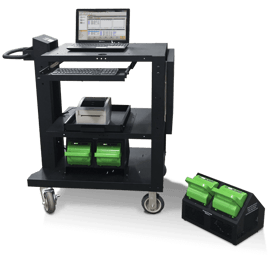 A portable power system is a mobile source of electricity designed to power workplace technology away from a wall outlet. Unlike extension cords or temporary wiring, these systems provide dependable battery power anywhere work happens.
Modern systems use advanced battery technologies to safely power equipment such as:
- Laptops
- Tablets
- Barcode scanners
- Thermal label printers
- Mobile computers
- POS equipment
- Audio/visual devices
Many systems include one or more AC outlet connections, allowing standard electronic equipment to plug in just as it would at a traditional workstation.
For warehouses, manufacturing facilities, distribution centers, and retail operations, portable power allows employees to complete tasks exactly where products are located instead of returning repeatedly to stationary workstations.
Benefits of Portable Power Systems
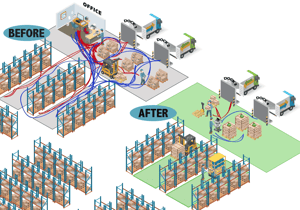 A quality portable power solution offers advantages far beyond simple mobility.
Improve Productivity
Employees spend less time walking between workstations and more time completing receiving, picking, packing, shipping, inspections, and inventory tasks.
Reduce Downtime
Reliable battery power keeps mobile equipment running throughout the workday without searching for available outlets.
Quiet Operation
Unlike generators, battery-powered systems operate silently, making them suitable for indoor industrial environments.
Lower Operating Costs
Battery-powered systems eliminate fuel expenses while significantly reducing routine maintenance compared to engine-driven equipment.
Improve Workplace Safety
Removing extension cords reduces trip hazards, while eliminating gasoline-powered equipment removes emissions from indoor workspaces.
Real-Time Battery Monitoring
Many modern systems provide Bluetooth connectivity or battery management software that helps monitor charging status, energy usage, and overall system health.
Why Warehouses Use Portable Power Systems
Warehouse operations depend on speed and accuracy.
When employees leave their work area multiple times each hour to print labels or access inventory systems, productivity suffers. Those extra steps also increase worker fatigue and create unnecessary delays throughout the fulfillment process.
Portable power systems support mobile powered carts that transform the warehouse into a fully connected workspace. Employees can carry computers, printers, scanners, and other technology directly to receiving docks, storage aisles, picking locations, and shipping stations.
Standalone systems also function as a portable power station for equipment that needs dependable electricity in locations where permanent power is unavailable or impractical.
How to Choose the Right Portable Power System
The best solution depends on several operational factors, including:
- Runtime requirements
- Equipment power demands
- Shift length
- Number of daily shifts
- Mobility requirements
- Available charging opportunities
- Budget
Newcastle Systems offers multiple portable power solutions designed to support different workflows and equipment configurations.
Sealed Lead Acid Battery vs. Lithium Power System
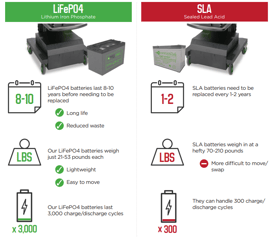 One of the biggest decisions is selecting the battery chemistry.
Sealed Lead Acid Battery
A sealed lead acid battery has been a proven industrial power source for many years. These systems typically have lower upfront costs and perform well for organizations with lighter usage requirements.
However, lead acid batteries generally:
- Weigh considerably more
- Require more frequent replacement
- Have shorter overall service life
- Deliver fewer charge cycles
For operations with moderate usage and limited budgets, sealed lead acid technology may still provide an effective solution.
Lithium Power System
A lithium power system offers substantial advantages for demanding warehouse environments.
Newcastle's lithium solutions utilize advanced lithium iron phosphate battery technology, providing:
- Longer service life
- Reduced weight
- Faster charging
- Greater efficiency
- Higher cycle life
- Improved reliability
Compared to traditional lead acid technology, lithium batteries can last up to eight times longer while weighing approximately one-third as much.
The lighter design also makes mobile carts easier to maneuver throughout busy facilities.
Swappable Battery vs. Fixed Battery Systems
Battery configuration is another important consideration.
Swappable Battery Systems
A swappable battery system allows operators to quickly replace a depleted battery with a fully charged one in seconds.
This approach is especially valuable for:
- Multi-shift facilities
- 24/7 warehouse operations
- High-volume distribution centers
- Continuous manufacturing environments
Instead of taking equipment out of service for charging, employees simply exchange batteries and continue working with minimal interruption.
Fixed Battery Systems
Fixed battery systems permanently mount the battery inside the equipment.
These systems typically offer greater battery capacity, making them ideal for single-shift operations that can recharge overnight.
At the end of each shift, the unit plugs into a charger and is ready for use the following day.
Newcastle Portable Power Solutions
Newcastle Systems manufactures several portable power options designed for different applications.
PowerSwap Nucleus Mini
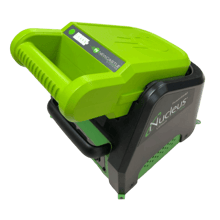 The PowerSwap Nucleus Mini is Newcastle's smallest swappable solution.
Weighing only six pounds, it provides mobile power for tablets, laptops, barcode scanners, and small thermal printers for up to four hours before a battery exchange.
Its lightweight design makes it ideal for highly mobile applications requiring frequent movement throughout the warehouse.

PowerSwap Nucleus Classic Solo and Dual
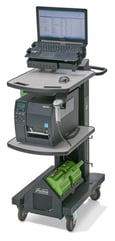 The PowerSwap Nucleus Classic Solo is Newcastle's most popular portable solution.
At only 11 pounds, it delivers up to eight hours of runtime while powering mobile computers, printers, tablets, and other warehouse equipment.
The Classic Dual doubles available battery resources, making it an excellent solution for extended operations or multiple consecutive shifts.
Because both systems use a swappable battery, productivity continues without lengthy charging interruptions.

PowerMaxx Lithium and SLA
PowerMaxx systems are designed for mobile powered carts supporting higher electrical loads.
Mounted securely beneath the cart, these systems provide dependable battery power throughout an entire shift.
The PowerMaxx Lithium model delivers up to 12 hours of operation on a single charge while offering an expected battery lifespan of up to 10 years. Bluetooth connectivity also allows operators to monitor battery performance.
The PowerMaxx SLA provides similar runtime using a sealed lead acid battery, making it an economical option for organizations with lower long-term usage requirements.
PowerPack Ultra Lithium and SLA
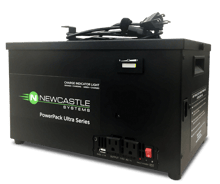 The PowerPack Ultra serves as a compact standalone portable power station that provides clean electricity without requiring a generator.
These units safely power:
- Computers
- POS systems
- AV equipment
- Office electronics
- Mobile workstations
The lithium version weighs only 17 pounds while providing up to eight hours of runtime and an extended service life approaching 10 years.
The SLA version delivers similar operating performance but weighs substantially more and requires battery replacement more frequently.

PowerPack Mega Lithium and SLA
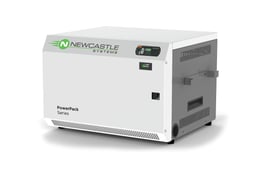 For applications with higher energy demands, the PowerPack Mega series delivers maximum portable performance.
The lithium model supplies more than 12 hours of continuous operation and supports equipment requiring substantial battery capacity throughout extended work periods.
Bluetooth monitoring simplifies battery management, while the long-lasting lithium iron phosphate battery minimizes replacement costs over time.
The SLA version offers similar operating capability using traditional battery technology for organizations prioritizing lower initial investment.

Invest in Mobile Productivity
Choosing the right portable power systems can significantly improve warehouse efficiency by bringing technology directly to employees instead of forcing employees to travel back to fixed workstations.
From lightweight swappable battery solutions to high-capacity standalone power units, Newcastle Systems offers options designed for nearly every industrial workflow. By selecting the right portable power system, organizations can improve productivity, reduce downtime, extend battery life, maximize battery capacity, and support safer, more efficient operations throughout receiving, inventory management, picking, packing, and shipping.

|
10 Tips to Improve Your Warehouse Receiving Process |
