



“IMAC” is the term used in IT that stands for "Install, Move, Add, Change" that describes the various phases of managing assets from the beginning to end of their lifecycle. Starting with the installation and continuing through the life of the “install” to include any relocations, modifications, relocations and even removal of both hardware, related equipment and the software that runs or manages it.
While the term originated as an IT acronym, in a world where software touches everything, it can be widely applied to areas you wouldn’t normally associate as IT-related. That includes one of the most static and almost unnoticed items in every warehouse and manufacturing facility – the ubiquitous racks!
What is a Rack Audit?
If you’ve never heard of a rack audit before, then you may want to read this in your office! They are a critical element of warehouse safety and regulatory compliance. But rack audits are nothing more than what the name sounds like – a critical protocol for ensuring the long-term safety, compliance (where necessary) and operational standards of the facility. They are essential for any facility with high velocity and frequent turns.
The actual rack audit itself is simply a systematic inspection of your facilities racking systems that is designed to assess structural integrity, safety assurance and regulatory compliance, overall wear and tear, which will ideally identify any potential hazards that may need to be addressed to ensure regulatory adherence safety regulations, and prevent accidents that could lead to injuries, financial losses, or an embarrassing YouTube video that gets shared millions of times.
We've all seen these videos, but did we think about all the missed Rack Audits?
All humor aside, a collapsing rack – even without resulting in any injuries or costly product losses – can be extremely costly if it results in lengthy downtime for renovation, cleanup and any required permitting for the new installations.
What a Rack Audit Might Uncover
There are numerous things that can be uncovered in a Rack Audit, and many times the audit might be triggered by a specific reason after a specific event. One provider who does Rack Audits indicates a wide variety of events/causes/issues that would generate a need for a Rack Audit:
- Detecting Unseen Damage - perhaps the most common culprit in rack collapses and injuries, it is often the damage that goes unseen and becomes a future problem after your own visual check though all was OK after a collision or other accident.
- Rack Installations and Reinstallations – for New Racking, Used Racking, or your own racking being re-used in a different configuration somewhere else (or any other change), a Rack Audit is a must to ensure they will perform to standards and are not a potential threat to injure anyone.
- Layout Changes Big and Small – any layout change that involved moving one or more racks would also be a reason to do an audit for the same reasons as those above.
- Regulatory Compliance – if your locale and/or industry have requirements regarding your racking then you will usually be required to conduct your audit annually. Ideally, you will do this before your visible certificate’s expiration date tp avoid fines or potential forced downtime.
- Insurance Renewals and Claims – Your insurance carrier will usually require these audits as part of your renewal process, but you may also need, or be required, to have one done before you can file a claim so that the cause of the accident can be accurately identified, or ideally, any potential liability can be excluded.
- Natural Disasters – and without question, any natural disaster that may have the potential to compromise the structural integrity of your racking would be another event that would require an audit. And this is not just about a mild quake. Even a small amount of flooding could create a potential threat if the flooring or the anchors were compromised in any way by the water.
As part of any audit, inspectors will also look at the surrounding environment and evaluate the quality and compliance of signage, clear walkways, training protocols and gear to ensure overall safety.
How to Speed Your Audits and Reduce Your Downtime
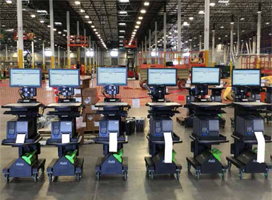
With software on tablets or laptops replacing clipboards, and the use of cameras and analytical tools making the audits more precise and accurate than ever, making the process a mobile one will bring along all the same advantages you might get with other processes that have already benefitted from your mobile computer cart.
If audits have previously been slow and cumbersome due to the need to make multiple trips for different scanning or testing devices, you can now manage the full range of tools along with your laptop, software, scanner, etc. in one compact space that moves with you.
In addition, a printer that is being used to produce labels for marking issues or follow-up items can be on hand and instantly produce labels on demand, or any other printed materials like a report that needs to be left with an individual overseeing the area being inspected.
|
Making the Case for Mobile Workstations for Receiving |
