
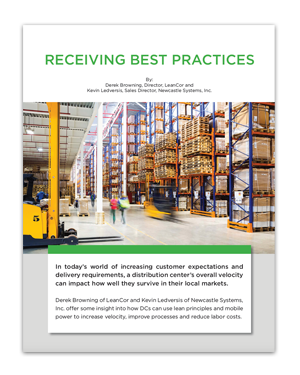
In a world where customers are beginning to demand order-to-ship lead times in terms of hours, we have to think differently about the design of our facility and the way we release work to the floor.
-
-
A facility designed for higher velocity activity can be more cost-effective as we alleviate bottlenecks
-
Keep operators busy at all times and have a higher frequency of accountability checks on performance
-
High velocity facilities are forced to look at the waste embedded in long walk paths to and from printers or to and from fast-moving product.
-
High velocity facilities are forced to examine the role of automation in core areas of their business, and synchronize the work in each of the areas so that it flows smoothly from shift start to shift end.
-